
Aztec bohemia
A London bookseller’s visionary homage to the Beat Generation reveals how Mexico nurtured a cultural revolution
By Gavin O’Toole
Mexico’s role in the momentous revolutions of the twentieth century is well documented alongside its own maelstrom from 1910–17 which forged the creation through blood and fire of a nationalist state.
From the 1920s onwards the country became a global ideological hub for communist politics, hosting Leon Trotsky and his struggle through the Fourth International against Stalin.
It took in more than 20,000 exiles from Spain’s civil war and was home, until the restoration of democracy in 1977 following Franco’s death, to the government in exile of the Spanish Republic.
Mexico was where Fidel and Raúl Castro formed the 26th of July Movement and met Che Guevara, was a safe haven for the Central American liberation movements of the 1970s and, during Guatemala’s long civil war, was a base for exiled indigenous and leftwing activists.
But Mexico’s formative role in another revolution—one that continues to have dramatic resonance today in the current sociopolitical context—has only ever been recognised tangentially.
As a spiritual, and often physical, refuge during the US counter-cultural revolution of the “long 1960s” (1955–74), Mexico was without doubt primus inter pares among destinations for the most influential creative dissidents of the era.
The poet Allen Ginsberg once told the US scholar John Tytell, for example, “that [he] would never fully understand the members of [the Beat] generation until [he] first experienced Mexico”.
And as the 20th-century American most synonymous with counter-cultural dissidence, Ginsberg more than any other character embodied both its global possibilities and the harsh reactionary responses to it by conformist Middle America.
By any standards this reaction remains relevant today: while we associate the 60s with hippies, Woodstock, the May événements in Paris and the death of Che, we forget that conservative US responses to the counter-culture would give birth to the conspiratorial narrative of “cultural Marxism” that is now fuelling rightwing activity across the world.
By the late 60s when these conservative responses were first being given intellectual form, Ginsberg and his Beat colleagues had become an institution—those the right most loved to hate. These poets and writers were sought out for their allegiance to a host of the then most important struggles evolving in an entirely new sociopolitical context: the anti-Vietnam war movement, Black and gay rights, feminism, and nascent environmentalism.
Their prominence was in no small measure attributable to the extraordinary voice they had found in Mexico, a crucible and catalyst for the creativity of the core Beat triumvirate: Ginsberg, Jack Kerouac and William Burroughs.
The reason for this went well beyond Mexico’s proximity, cheap living and the availability of drugs—to these Aztec bohemians, the country was a legal refuge, a spiritual font, and a canvas for radical experimentation.
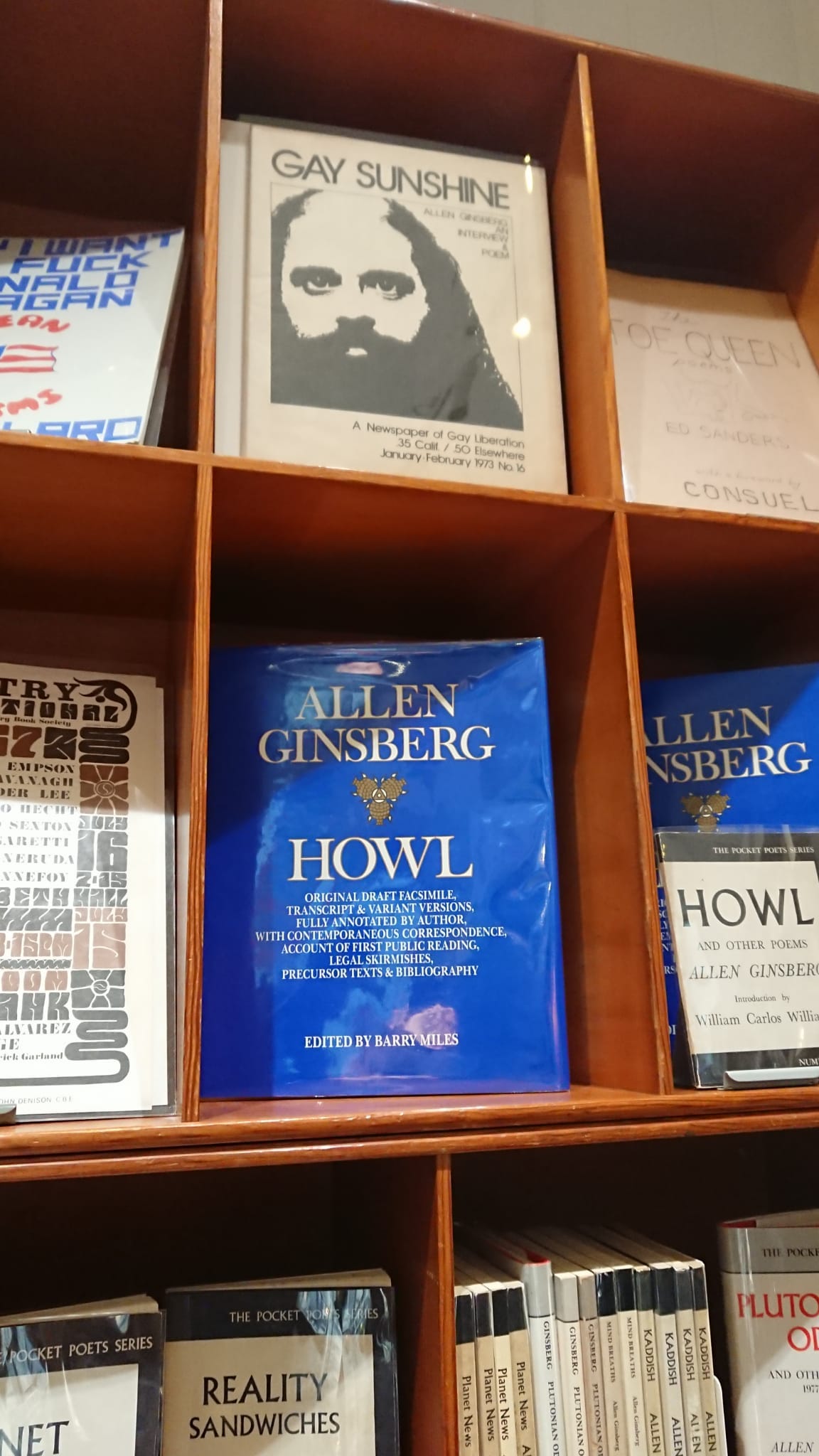
It takes vision to recognise vision, and to mark Ginsberg’s birth in New Jersey on 3 June 1926, and with a strong nod to his fascination for Mexico, the rare bookseller Sotheran’s has converted its store at Cecil Court in London into the Allen Ginsberg Centenary Bookshop.
It has swapped its usual stock for books by and about Ginsberg, other members of the Beat Generation including Kerouac, Burroughs and writers who influenced or were influenced by them.
As Gordon Brough, owner of Sotheran’s and an avid collector of Beat literature, notes: “That these three roommates would go on to produce three of the century’s most important works—Howl, On the Road, and Naked Lunch—is not only remarkable, but also a testament to Ginsberg’s frenetic energy in promoting his friends. Rarely can such a small coterie of writers have proved so influential in the development and exchange of new ideas.”
Brough points to the global importance of Ginsberg, arguing that few such poets have had as significant and wide-ranging an influence beyond the boundaries of his own social milieu.
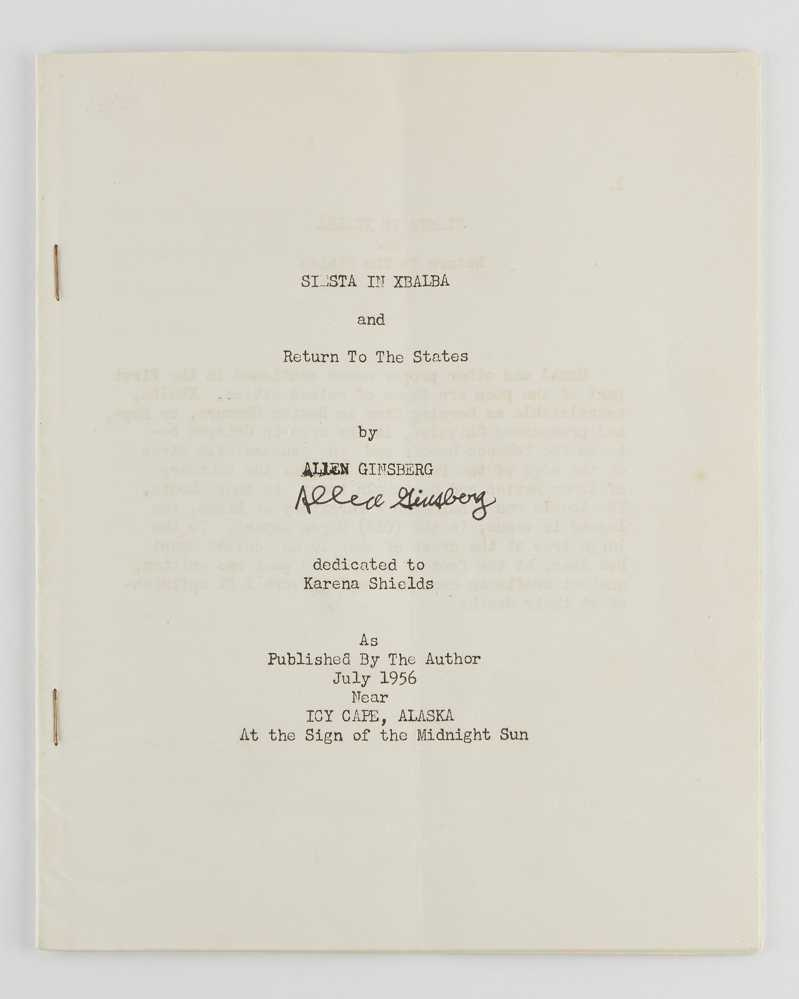
Items on display at Sotheran’s of particular note include a remarkable original manuscript of Siesta in Xbalba and Return to the States, Ginsberg’s long poem written in 1954 dedicated to Karena Shields, an intrepid American living on a finca in Mexico with whom he had stayed.
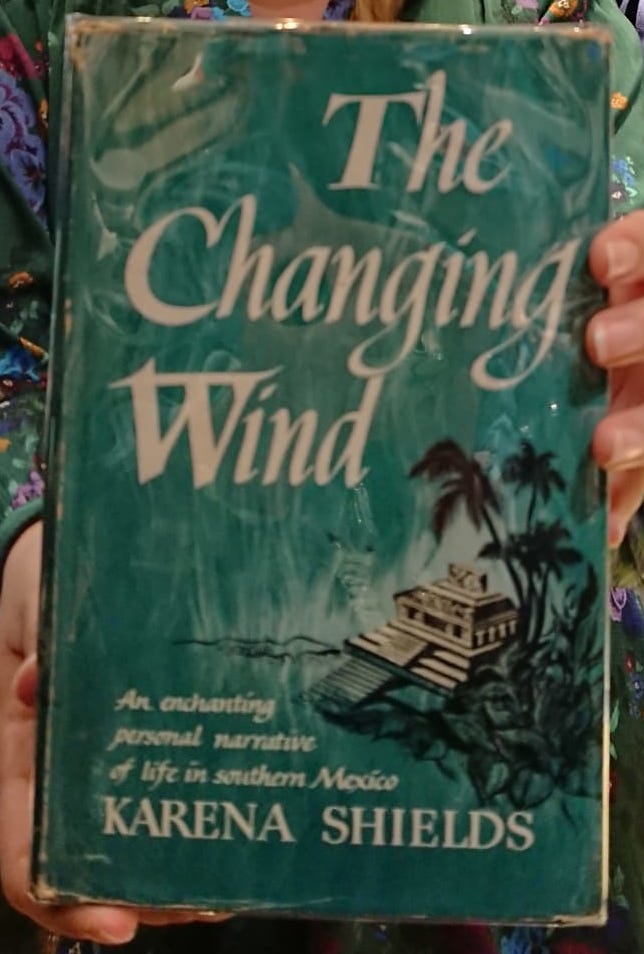
While Shields own role hosting this countercultural revolutionary has been largely downplayed (David Wills at Beatdom has written an excellent profile of her) Sotheran’s intrepid Aoife Godlove searched for and found another remarkable item also held by the bookseller, Shields’ personal narrative, The Changing Wind.
Another key Beat Generation figure whose work figures prominently at the centenary display is Lawrence Ferlinghetti, the City Lights founder and activist publisher behind such phenomena as the Summer of Love who would later become Poet Laureate of San Francisco.
What was it about Mexico that attracted these creative pioneers? David Stephen Calonne sought to answer this in his 2022 book The Beats in Mexico, suggesting that alongside drugs Mexico offered counter-cultural figures other means of expanding their imagination.
Kerouac offers one set of possible answers: Mexico provided a spiritual escape from the suffocating constraints of the aspirational consumer-oriented, frenetic urban America that was emerging from the second world war.
Mexico figures particularly prominently in the story of Ginsberg’s Howl, a poem more than any other that changed 20th-century America: he had been in the country directly prior to returning to San Francisco where he wrote it.
Later, Ginsberg would say that Siesta in Xbalba had been critical to freeing his poetic voice such that it had led “inevitably” to the rhythmic innovations of Howl.
Scholars have suggested that key motifs in the poem, imagery and frequent use of the word “howl” itself first began to appear in Ginsberg’s personal journals and letters while he had been exploring Mexico.
Moreover, while Ginsberg was writing the poem in California, he would mail drafts to Kerouac in Mexico City for feedback: it was a poem, you might say, that was born in Mexico and kept returning.
The subsequent 1957 Howl obscenity trial would be a flashpoint in postwar American culture, exposing deep-seated moral panic brewing within a US establishment frozen by Cold War conformism and terrified of subversion.
Given that, it is also likely that alongside Mexico’s contribution to the Beats’ creative output, the country’s tolerance of radical foreigners and its revolutionary appeal, well established since the 1920s, also mattered, especially to Ginsberg and Ferlinghetti (David Wills also provides an excellent overview of the Beat poets’ politics).
Both men, for example, did not hide their socialist or anarcho-socialist sympathies. Ginsberg’s mother was an active communist and he was a tireless activist denouncing US imperialism, fighting against its war machine, and advancing gay rights among other causes.
While idiosyncratic in his political views, Ginsberg talked openly about his links with communism. Like Ferlinghetti, he was active in the Cuban solidarity movement, and both men would pen poems to Che Guevara following the revolutionary’s death in 1967.
Sotheran’s homage to this important generation displays timely insight, for just as in 1950s America when challenges to established cultural norms were fuelling an elite backlash, we find ourselves today confronting similar forces of reaction.
What role Mexico will play nurturing a new generation of global culture warriors who, like the Beat Generation, will do battle to transform the way we understand ourselves, remains to be seen.
You can visit the Allen Ginsberg Centenary Bookshop at Sotheran’s, 8 Cecil Court, London WC2N 4HE, until Saturday 20 June