
Future imperfect
Latin America figures prominently in a history of urban visions. Books in brief: The Invention of the Future: A History of Cities in the Modern World
The Invention of the Future: A History of Cities in the Modern World, Bruno Carvalho, 2026, Princeton University Press
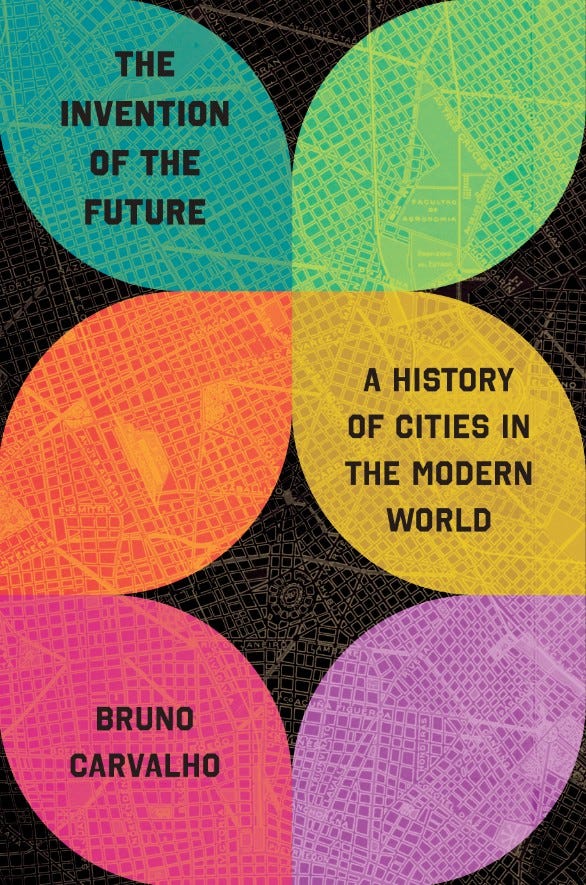
For many centuries, the future was at the heart of urban planning, reflecting how modern cities enshrined the ambition to provide all manner of progress.
In our own era, planners dreamed of cities as places of technological mastery with flying cars and effortless transit, luxury living and happy egalitarianism.
We see traces of these visions still in the utopian fictions of life in Mars colonies—almost a throwback to images of the future contained in The Jetsons of early 1960s American TV—or more terrestrially , in societies transformed by artificial intelligence and robotics.
But despite the irreversible trend towards urbanisation globally, are the ambitious futures that once gave urban planning its sense of purpose subsiding? In short, is the future a thing of the past?
Bruno Carvalho writes: “More recently, climate change created another condition: calamity seems inevitable. With curtailed powers, urban planning has become more engaged in adaptation and mitigation than making new worlds. Myriad narratives present the future as something to be prevented rather than built.”
In this global history of how urban visions reflected the changing understanding and meaning of modernity, Latin American cities figure prominently, from the reforms to modernise Rio de Janeiro between 1903-06 after the abolition of slavery; the rivalry in the 1920s and 30s by local planners in Buenos Aires and the modernist icon Le Corbusier; to the growth and challenges posed by the voracious growth of Mexico City and Brasília.
In this elegant history of urban aspirations, Carvalho explores competing visions of possible urban futures expressed by a large range of figures, the constraints imposed by hard facts on the ground, and the influence of philosophy and political ideas on visions of the possible.
The point he aims to make is that allusions to the future are a tool to stretch the limits of the “thinkable” in urban design, yet dreams can never survive contact with empirical realities.
Urban planning will always confront a series of thorny questions, and by examining the past we can better answer these for the present.
The author writes: “How did people in the past make sense of their futures in a changing world? What are the connections between the imagined cities of tomorrow and how cities actually developed? Who and what belongs in any given vision? Who gets to decide? How is it supposed to materialise? What does it look like?”
Understanding how past urban transformations have eluded predictions, he argues, can help us to put contemporary plans into perspective. Knowledge of the history of cities could even reinvigorate our capacity to pursue transformations on a large scale, rather than succumbing to doom.
Carvalho writes: “In the least, they serve as humbling reminders for us to accept the limits of what can be known and controlled about the future.”
BUY THIS BOOK: UK/Europe ——— USA/Americas