Negative score
US basketball coaches are exploiting Black Latin American youths. Books in brief: Basketball Trafficking: Stolen Black Panamanian Dreams, Javier Wallace, by Gavin O'Toole
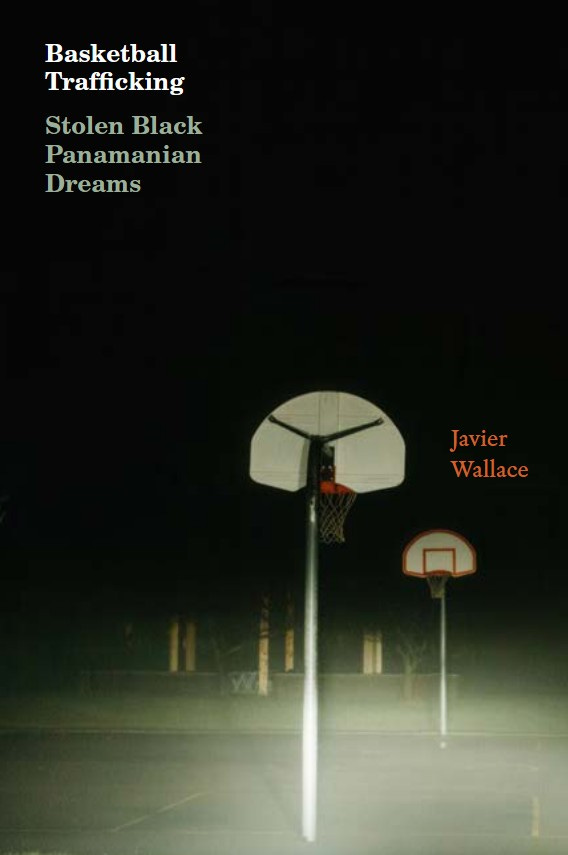
Basketball Trafficking: Stolen Black Panamanian Dreams, Javier Wallace, 2025, Duke University Press
Exploitation assumes many faces in the world of late capitalism, but few are less likely to be recognisable at first sight than that of the humble college basketball coach.
Yet as Javier Wallace points out in this shocking and revelatory journey into what is called America’s athletic industrial complex (AIC), this exploitation is real and disturbing.
The author coins the term “basketball trafficking” to refer to the exploitative and unregulated migration of youth to the United States through international interscholastic athletic programmes which, in many instances, begins with them gaining an “F-1” student visa.
Once in the US, some may prosper in the sport and go on to live their American dream—but many will not, as in the case of Tito whom the author knew personally, becoming victims of unscrupulous coaches with disproportionate power over their fate.
Tito initially arrived on an athletic scholarship to play high school basketball, an experience quickly tainted by exploitation and abuse that would go disastrously wrong when his scholarship was revoked by his coach purportedly due to his poor academic performance.
For youths like him a scholarship provides the only basis of legal status in US, and once lost results in a classification that is highly likely to result in their removal or departure.
In Tito’s case, it turns out the coach’s claims of poor academic results were dubious, and it was his performance on the court that was issue.
Moreover, none of the promises of support he had been made by the college were fulfilled, and he was living in deplorable living conditions, being fed inadequately, living under threats of being forcibly removed from the country, and being verbally and psychologically abused.
It is timely to be exploring this theme, because non-citizen players like Tito who do not find success within the system are undoubtedly currently facing the brutal wrath of ICE.
Moreover, as Wallace points out, the bigger picture is that there is a racialised dimension to this form of exploitation, which depends on the athletic labour of Black boys from countries such as Panama who are enticed by false promises of mobility.
What they encounter instead is a sporting industry that brings together powerful corporations such as sportswear companies and associations such as the NBA to exploit for profit their obvious vulnerability as Black immigrant males.
As Wallace argues, this form of trafficking is only possible in a global system that is highly inequitable and, as such, assigns value differently based on an individual’s race—a system of “global apartheid” that affects Black populations disproportionately.
The author’s aims are, first, to influence policies surrounding the use of the “F-1” student visa for athletic purposes in US interscholastic basketball, which is at the heart of this system of exploitation and trafficking.
Second, and more importantly, Wallace’s study aims to counter the dominant narrative associated with Black Panamanian youths like Tito, whose labour—and humanity—has for too long been exploited and undervalued.
*Please help the Latin American Review of Books: you can subscribe on Substack for just one month ($5) or, if you like what we do, you can make a donation through Stripe

