
Reproductive resistance
Judiciaries have shaped how abortion has risen up the agenda. Books in brief: The Judicial Politics of Abortion in Latin America: Argentina, Colombia, Costa Rica, and Mexico
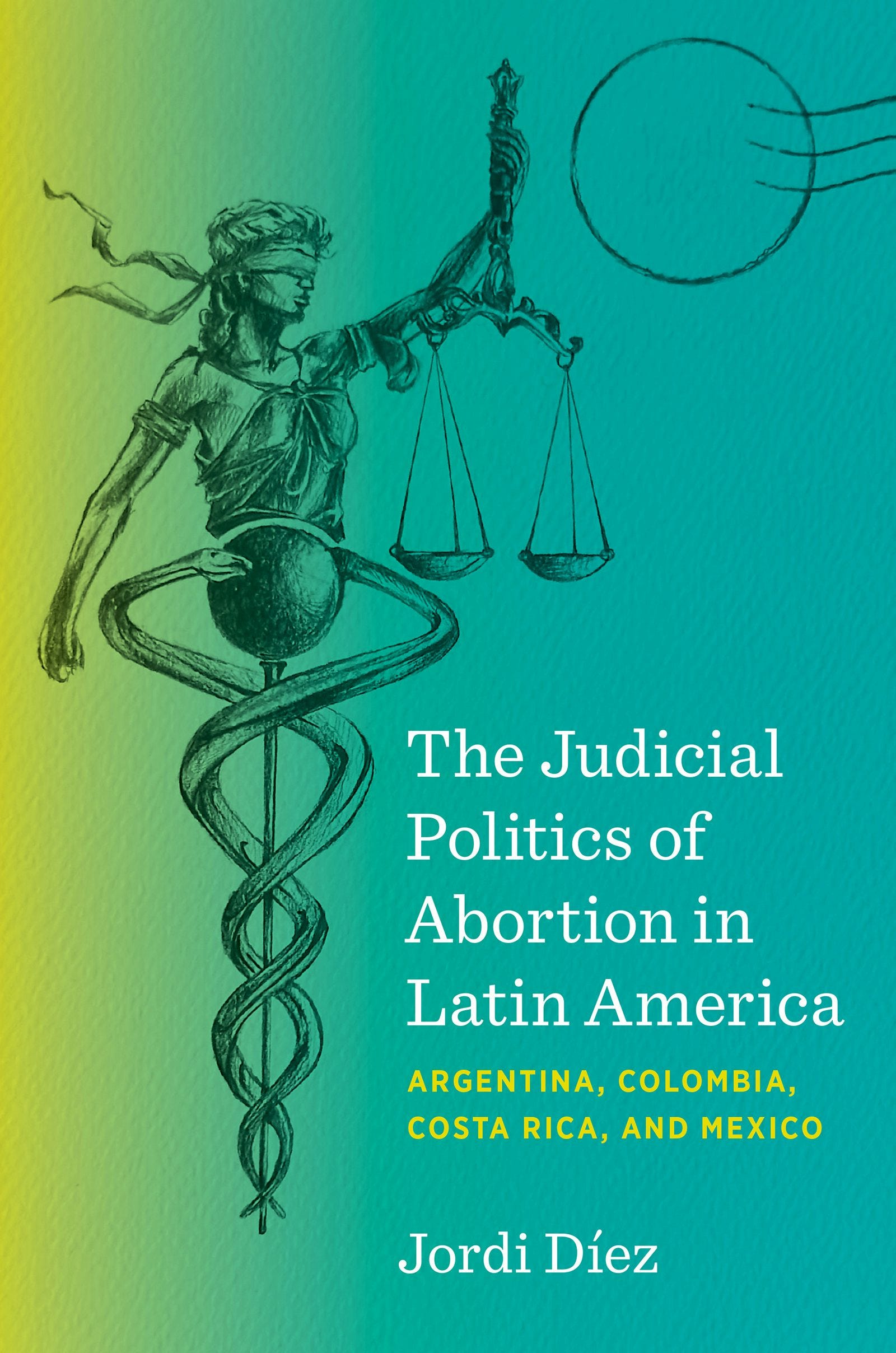
The Judicial Politics of Abortion in Latin America: Argentina, Colombia, Costa Rica, and Mexico, Jordi Díez, 2025, University of North Carolina Press
Chile represents the best and most current example of why the issue of abortion remains a live barometer of women’s rights and the wider consolidation of democracy in Latin America.
The issue is a lightning rod for conservatives and a cause célèbre for the left, and is likely to be catapulted to the top of the agenda under the country’s new far-right president, José Antonio Kast.
Abortion was permitted in Chile for medical reasons from the 1930s until its military tyrant Augusto Pinochet issued a total ban on it in 1989 as one of his last decrees.
Efforts to ease this ban after 1991 were routinely blocked by the country’s deeply conservative establishment, but some exceptions were introduced in limited circumstances in 2017 after a bitterly fought campaign for reform.
Reproductive rights would form a key strand of debates over the proposed draft constitution in 2022, which was eventually rejected in a referendum.
As ever, the Catholic church has hovered behind the scenes pulling strings to stymie change even while evidence suggests public opinion is more favourable to abortion in some cases.
Kast, an ultra-Catholic whose father was a member of the Nazi party, has been a vehement opponent of abortion throughout his career and has pushed to end even the limited exceptions of 2017 to the total ban.
An unreconstructed apologist of Pinochet, he has signalled the hardline stance that he wishes to take by naming the anti-abortion activist Judith Marín, a 30-year-old evangelical fanatic, as women and gender equality minister.
Chile exemplifies how the battle by women to have control over their own bodies is far from won in Latin America, where restrictions on abortion comprise a public health crisis of unimaginable proportions.
The region experiences up to 2,000 deaths each year from the 1.65 million unsafe abortions that take place—at least 10 per cent of all maternal deaths.
The turn of the century marked an inflection point in which regulations began to be eased in many countries, culminating in complete decriminalisation in Uruguay in 2012, Argentina in 2020, Colombia in 2022, and Mexico in 2021-23.
Yet, as Chile demonstrates, there remains significant variance, and some countries such as the Dominican Republic, El Salvador and Nicaragua have even reinforced prohibitions.
The Judicial Politics of Abortion in Latin America aims to understand this variance from the vantage of increasing judicialisation of the issue of abortion and of Latin American politics more generally.
Jordi Díez examines the role of the judiciary in major reforms that either altered or cemented abotion regimes—from 1999 to 2024 there were 20 significant reforms, 14 of which involved the participation of the judiciary, often to the level of constitutional tribunals.
In an effort to comprehend judicial decision-making, he explores in detail four landmark rulings on abortion that capture different aspects of this variance during what he calls the “first wave” of abortion decriminalisation from 2000–2012: a 2012 case in Argentina’s Supreme Court; a 2006 case in the Colombian Constitutional Court; a 2008 case in Mexico’s Supreme Court; and a 2007 case in Costa Rica’s Constitutional Chamber.
His argument is that data suggests variance in the type of decisions can explained by the presence of strategic actors—justices and law clerks—who are able to assemble majorities in favour of reducing restrictions on abortion by strategically deploying arguments, a factor which is in turn influenced by the political climate.
This is an important book because it goes beyond a research focus on judicial behavior that takes the direction of an entire court as a measurement of behavior to look at how strategic bargaining takes place within Latin American courts in the crafting of rulings.
It also demonstrates how formal institutions continue to matter in the exercise of democracy and that judicial independence remains in flux—high courts are profoundly political institutions in which bargaining takes place.
Díez writes: “The benches of these institutions are populated by keen political actors who have policy preferences, act strategically to pursue them, and are embedded in the social and political contexts that shape their behavior. If anything, this book’s analysis calls for greater attention to the internal politics of high courts.”
This suggests that the role of the judiciary in the politics of abortion cannot be divorced from wider debates and sentiments—the court of public opinion matters—and that legislative and social activism can therefore ultimately influence outcomes.
In short, the women of Chile will be faced with the need to mobilise energetically against retrograde actions by their far-right president—but they can still rein him in.
BUY THIS BOOK: UK/Europe ——— USA/Americas