
When Pop goes ‘pop!’
Antonio Dias was the most famous Brazilian pop artist that never was. Books in brief: Borderless Painting as Borderless Art: Antonio Dias between Brazil and Europe
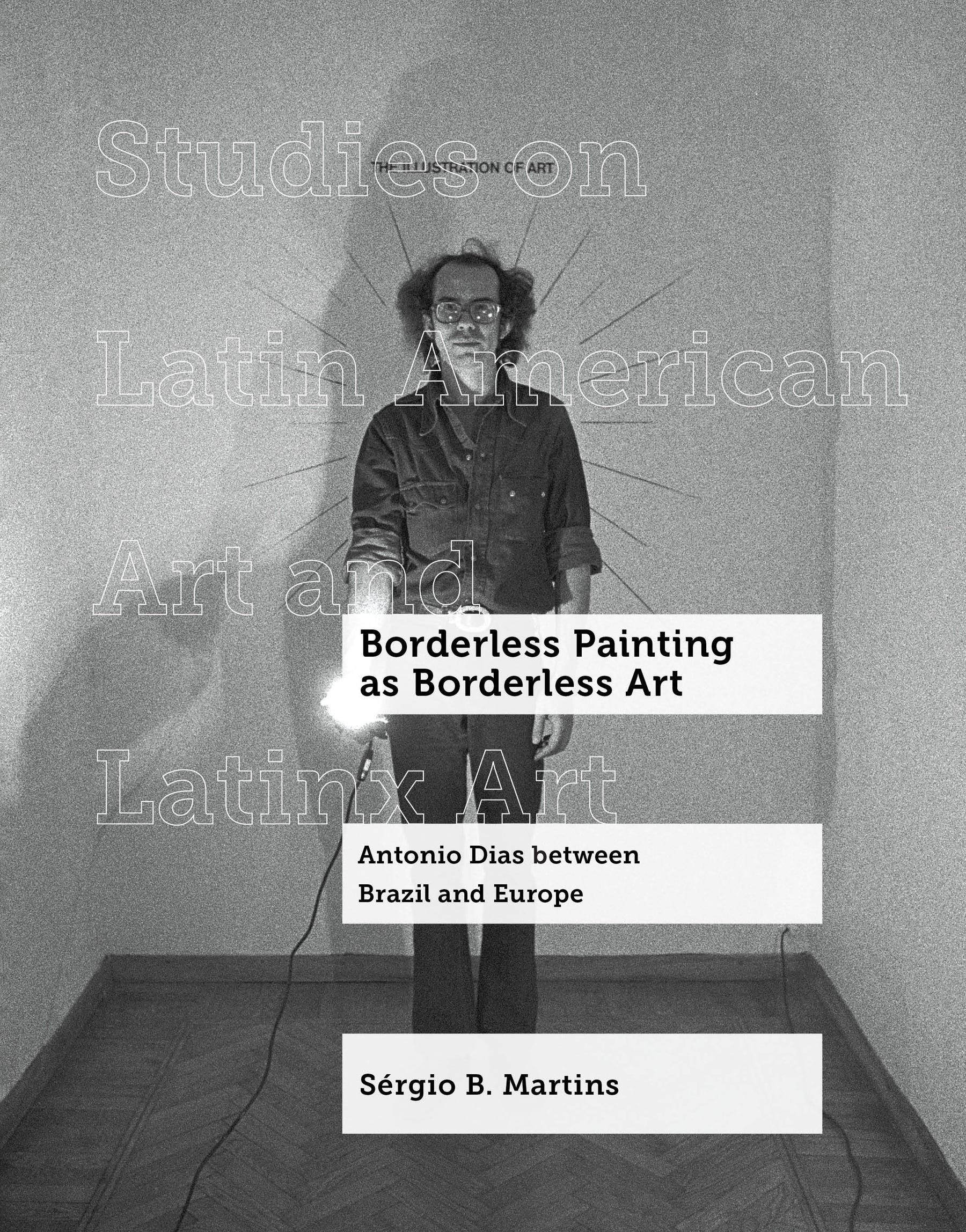
Borderless Painting as Borderless Art: Antonio Dias between Brazil and Europe, Sérgio B Martins, 2026, University of California Press
By Gavin O’Toole
The celebrated Brazilian artist and graphic designer Antonio Dias insisted to the very end that he was not a “pop artist” in the vein of Jasper Johns, Robert Rauschenberg and Andy Warhol.
Prominent during the concretist and Tropicália movements of the 1950s and 60s, outside Brazil where he spent much of his career he was nonetheless forever pigeonholed by critics and curators within the American Pop Art movement.
Indeed, in 2015 his work was included in “The World Goes Pop” exhibition at London’s Tate Modern, prompting him to complain—albeit half-heartedly—to the The New York Times that Pop was “not my party”.
His own preferred affiliation was with the terms “new figuration” or “narrative figuration”, derived from the French nouvelle figuration and figuration narrative, and in 1965 he had his first solo exhibition in Paris at the Galerie Houston Brown, later gaining the Award for Painting at the Paris Biennale.
Sérgio Martins explores the artist’s own conceptualisation of his work, with his point of departure a note written by the artist in a spiral notebook in the early 1970s that reads simply “borderless painting as borderless art”.
Enigmatic and riddlelike, it seems like a good place to begin a journey taken by this Brazilian exile into a subversion of the philosophical pretensions of Anglo-American conceptual art.
The author’s focus is Dias’ move to Europe, first to Paris in 1967 and then Milan in 1968, after he had already made a name for himself in his home country in the socially and politcally charged climate following the 1964 coup.
This was a period of anti-imperialist struggle and growing repression, which Martins argues partly explains why Dias eventually chose to remain in Europe rather than resettle in Brazil.
But it was not just that, and the author goes on to explore Dias’s radical decision to abandon his successful early style and embrace a new, cerebral and austere graphic vocabulary after 1968 in terms of his critical reception in Europe and shifting transnational avant-gardism.
In particular, suggests Martins, Dias was influenced by an encounter in 1969 with the Uruguayan artist and theorist Luiz Camnitzer who had mounted a harsh critique of transculturation—assimilation and naturalisation in the periphery of cultural and artistic experiences originating in the metropolis.
This was a prominent theme in Latin American thought at the time, influencing a broad range of social, economic and cultural critiques and forming the basis of dependency theory.
It is an argument that appealed to Dias, says Martins, who as an artist in exile faced a particular dilemma: “… no matter how much he engaged with new languages and tendencies emerging in Europe, and even if he sometimes circulated in exhibitions devoted to Italian artists, it was clear that both his life and the reception of his work would always be determined, to a considerable extent, by his South American origin”.
The author argues that Dias’s career up to the mid-1970s serves as a snapshot of the transition to post-avant-gardism, which underscores the borderless characterisation of the title
While Dias established himself in the avant-gardist scene of Rio de Janeiro in the 1960s, where the contemporary art market remained incipient, in Europe the market played a quasi-institutional role whereby artistic groups revolved around the work of critics and curators.
Martins writes: “So, if post-avant-gardism is primarily a temporal category, Antonio Dias’s trajectory underscores its less obvious spatiality: it is in the quick adaptation required for him to fit into (or at least negotiate with) that foreign art scene, and not in the slow assimilation of a historical transition, that his work registers the tension between avant-gardism and post-avant-gardism.”
An interesting and valuable contribution to art history brimming with plates of his work and photographs from his career, Borderless Painting as Borderless Art: Antonio Dias between Brazil and Europe represents a well-informed and original source of reference.
BUY THIS BOOK: UK/Europe