
Chile’s nightmare returns
Kast’s election will open the country’s sores. Review: Tales from the Sharp End: A Portrait of Chile, Natascha Scott-Stokes, by Gavin O'Toole
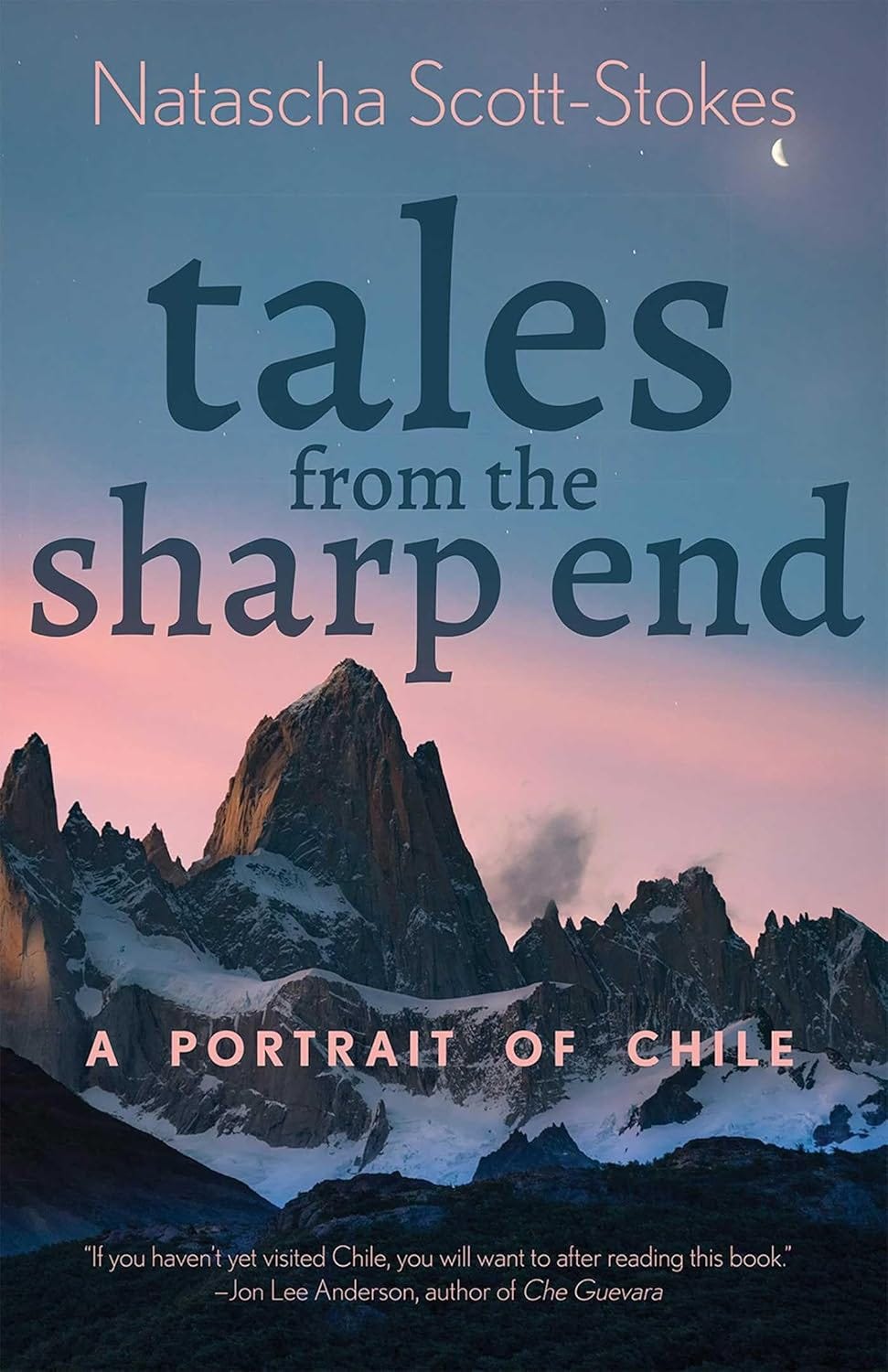
Tales from the Sharp End: A Portrait of Chile, Natascha Scott-Stokes, 2024, University of New Mexico Press
One wonders how long it will take before Chile is engulfed by another estallido social—a replay of the massive clashes of late 2019 and early 2020—or even something far worse.
Plenty of incidental reasons have been put forward for this outburst of popular anger towards the state, from a rise in Metro fares, the onerous cost of living and student unemployment to excessive privatisation and rampant inequality.
Yet the underlying, systemic divisions that sparked the unrest and ultimately then carried the leftwing Gabriel Boric to power—all but erasing the centre in Chilean politics in the process—have only deepened.
This has become apparent throughout the course of the recent election in which the Chilean left faced the far-right, and lost.
The election of ultra-conservative populist José Antonio Kast to succeed Boric, against whom he battled in the 2021 election, opens a new and uncertain chapter in Chile’s recent history, and one that we cannot be confident will be stable or even peaceful.
It was, in some ways, the first real election since the end of the appalling Pinochet dictatorship because the parties that had embodied the centre in the past had merely reflected a transition to democracy after the tyrant’s departure based on uncomfortable compromises.
The estallido social, Boric’s accession, the rejection of a new constitution, and finally the election on Sunday of his nemesis, Kast, all confirmed that this transitional period was well and truly over: night has fallen on the days of compromise … and Pinochet’s heirs stalk it.
Kast’s triumph will send a shiver down the spines of the country’s left, not just because of his alarming campaign pledges but because of who he is—not only is the president-elect the son of a Nazi party member, he is also an unreconstructed admirer of Pinochet.
We can speculate as much as we like on the reasons for Kast’s victory—most analysts point to a fear of crime, the use of a Trumpian playbook about immigration, and a general rightwards drift in South America reaping implied support from the Maga US—but the simple fact is that for many Chileans on the left a potential nightmare is unfolding.
That is because, as Natascha Scott-Stokes notes in her eloquent journey into Chilean society and culture, trauma remains very much part of the left’s inheritance after the brutal military period. Kast will empower the unrepentant security establishment anew.
Scott-Stokes writes: “The shadow of the 1973 military coup in Chile casts a heavy pall over the confrontation between ordinary people and the state today. The genuine fear in the bones of every Chilean over fifty is palpable. They lived this as children, saw their loved ones taken away, never to be seen again; were conscripted against their wishes; saw bodies floating in rivers; and were tortured and humiliated. No wonder people here don’t like to speak their mind, much less complain in public.”
This trauma helps to explain why in 2019–20 it was the youth that challenged the neoliberal state that has failed to deliver the rewards of democratic transition for so many Chileans. When the estallido social exploded, Chile ranked as one of the most unequal OECD nations.
An established travel writer and resident of Chile since 2006, Scott-Stokes provides the reader with a fascinating tapestry of observations on history and culture that will serve as the perfect introduction for visitors to the country.
Based on her experience of living and exploring Chile, her book demonstrates a determination to understand its complexities, what she calls “both a love letter to Chile and a heartfelt lament for a country living at the sharp end of human folly and climate change”.
Her forays into analysis of the divided politics of the place offer keen insights into what has happened on the ground combined with a passionate and sympathetic commitment to explaining its causes.
During the uprising, for example, Scott-Stokes wrote from under a de facto siege as a state of emergency and curfew locked down large areas.
“A headless monster is fighting a one-eyed cyclops in Chile right now, and the outcome is far from clear,” reads her account at the time.
“The fury unleashed after three decades of repressed anger and hate harboured by people trapped in a straitjacket of inequality and incensed by the unanswered questions of what happened to so many of the tortured and disappeared during the military dictatorship is awful to behold.
“The peace and prosperity that has made Chile one of the wealthiest and most highly developed countries in Latin America has come at a terrible price to natural and human resources, and people literally can’t take it anymore.”
In a wide-ranging series of essays, the author examines Chile’s history, amazing natural landscapes, and its many social contradictions and anomalies that have made mental health services one of the fastest growing sectors.
She recalls the devastating 2010 earthquake, three minutes of hell at a staggering 8.5 on the Richter Scale that released energy equivalent to 800,000 Hiroshima bombs.
Highly destructive, it left the country battered, and 525 people lost their lives—but this outcome is also a bitter testament to Chilean achievement in reaching levels of development that make it one of the most advanced countries in Latin America: the catastrophic Haitian earthquake of the same year, for example, was far less strong yet claimed up to 316,000 lives.
Scott-Stokes also considers one of the most pressing issues facing urbane Chileans: the ethnic cleansing of the Mapuche Indigenous people that remains underway in the Araucanía.
In a courageous chapter, the writer speaks out about “the larger backdrop of the violence and crimes against humanity that are being carried out by the national army and police force” in the southern regions of Araucanía, Los Ríos, and Los Lagos.
This, she writes, “is an ongoing situation that is not only damaging the country’s international reputation and economy but has also poisoned local society there, pitching mestizos against Indians, landowners against labourers and the landless, and entire local communities against their transnational industrial neighbours, and anyone trying to make a tourist dollar against anyone who is destroying the peace and private property.”
Importantly, Scott-Stokes draws parallels with the violent conflicts in places as diverse as Palestine and Myanmar, and the near-impossibility of finding peaceful solutions for a people collectively branded “terrorist” by the state by dint of their very existence.
Yet of all the challenges facing Chile today, there seems little doubt that what surfaced in fire and fury in 2019–20, and into which the struggle of the Mapuche flowed, today remains by far the most pressing.
The estallido social let loose Chile’s social genie while unshackling the unreformed state’s hatred of those citizens not content with acquiescence.
At least 36 people died as a result of the violence, many but by no means all at the hands of state security forces, and thousands were injured and arrested in a hyper-violent clampdown denounced by numerous human rights advocates.
Despite the good grace with which Boric has treated Kast’s election, the ghost of Pinochet has risen—and Chile’s democracy and society face their greatest test since 1973.
*Please help the Latin American Review of Books: you can subscribe on Substack for just one month ($5) or, if you like what we do, you can make a donation through Stripe or PayPal (send your PayPal contributions to editor@latamrob.com
Great article. Difficult times ahead for Chile. And thanks for alerting us all to Scott-Stokes' book!
I have a lot of faith in Chile. It will be a tough time, yes, because of Kast, but he has no answers. None of these nutty trump-puppets do. Trump himself is flailing. The unified left is in Chile is strong, they just need to convince the disaffected that it can make a difference